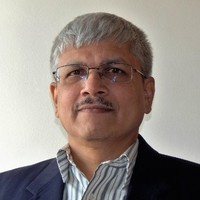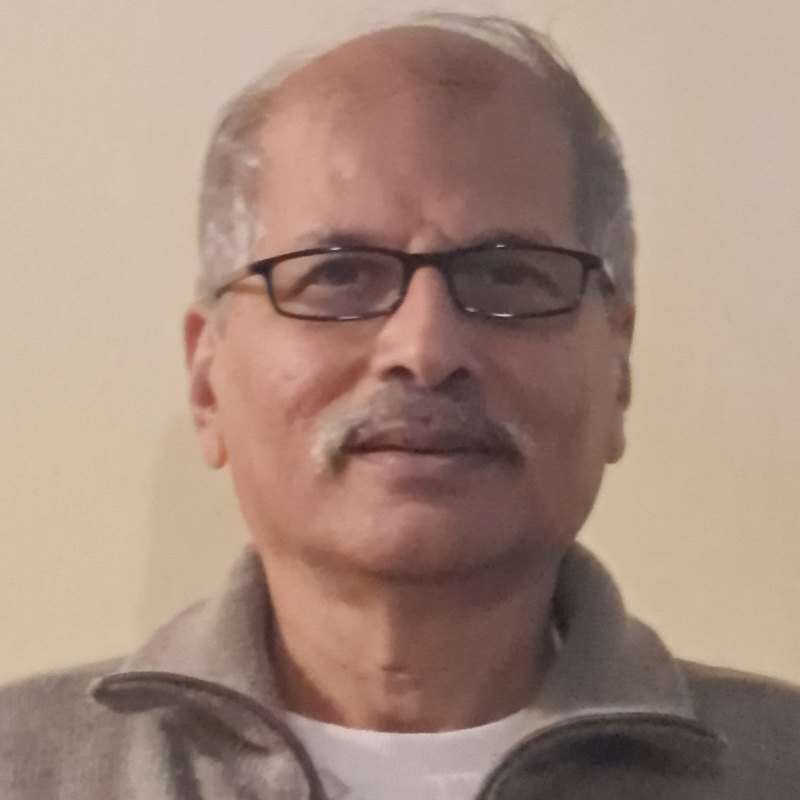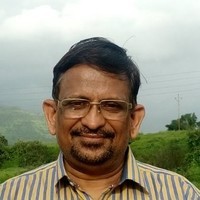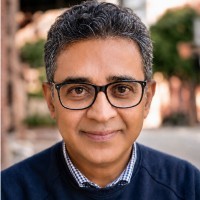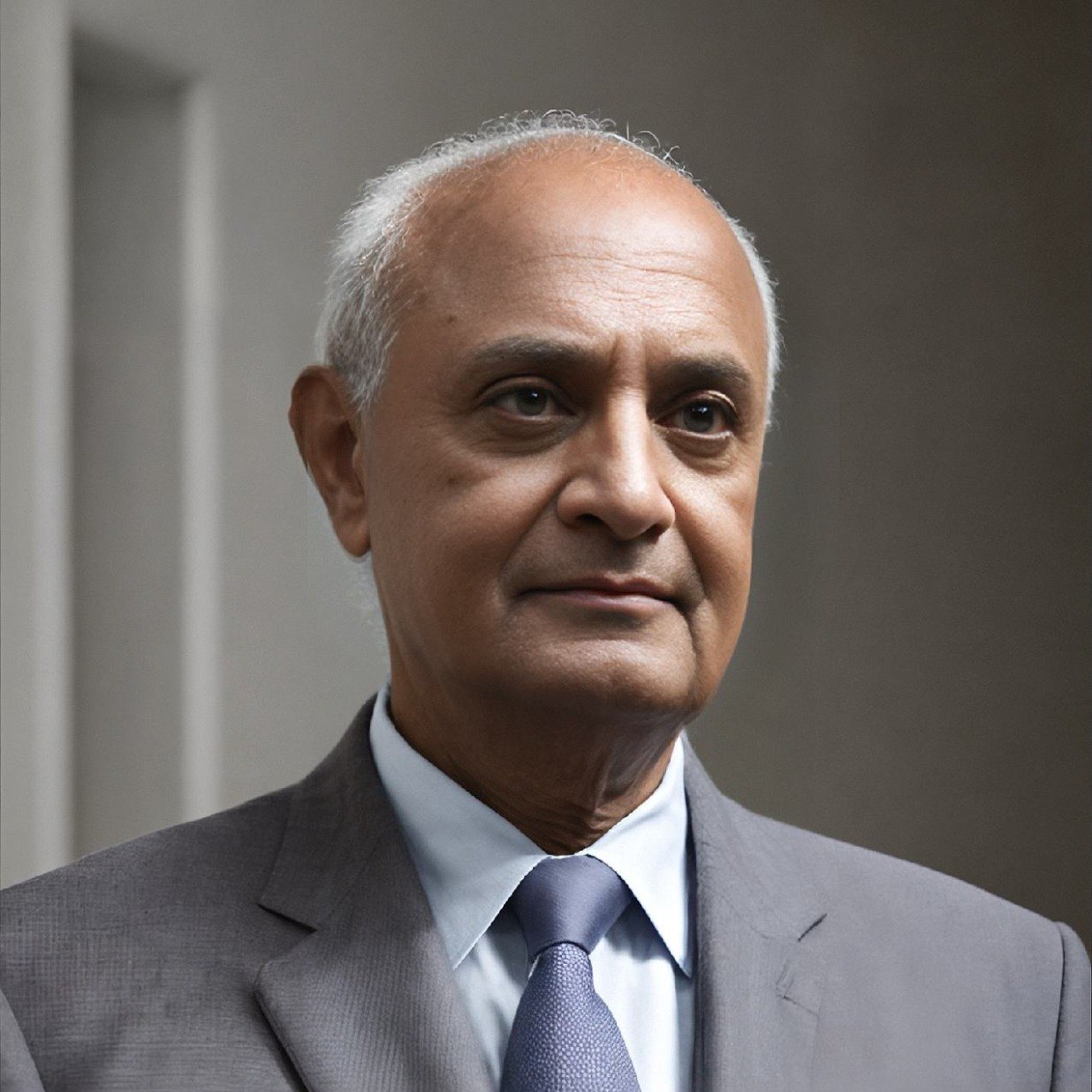
Advisors Prof. Pratim Biswas, Member, US National Academy of Engineering; former Dean of Engineering, University of Miami Prof. Janat Shah, founding Director, IIM Udaipur

Thermo-Cognitive Advanced Process Control (TC-APC) models, simulates and optimizes your process in real time to improve yield, conversion and throughput, and reduce energy use, with a quick payback.

About and contact

An engineering group of IIT Bombay alumni.

Advised by Prof. Pratim Biswas, Member of the US National Academy of Engineering and former Dean of Engineering, University of Miami, and Prof. Janat Shah, founding Director of IIM Udaipur.


Advisors

Our advisors.

Prof. Pratim Biswas

Chief Scientific Advisor

Prof. Pratim Biswas

Member, US National Academy of Engineering

In the Academy's own words, election “is among the highest professional distinctions accorded to an engineer.”

  • Stevenson Endowed Professor and Inaugural Executive Director, Institute for Engineering Innovation and Global Engagement, Vanderbilt University.
  • Former Dean of Engineering, University of Miami.
  • Fuchs Memorial Award, 2018: the highest honor in aerosol science, given once every four years. Fewer than 20 scientists have received it since 1990.
  • Distinguished Alumnus, IIT Bombay.
  • Over 500 refereed papers, 17 patents and 65 Ph.D. graduates.
  • Combustion, aerosol and particle science.

B.Tech, IIT Bombay; M.S. in Chemical, Nuclear and Thermal Engineering, UCLA; Ph.D. in Engineering, Caltech.
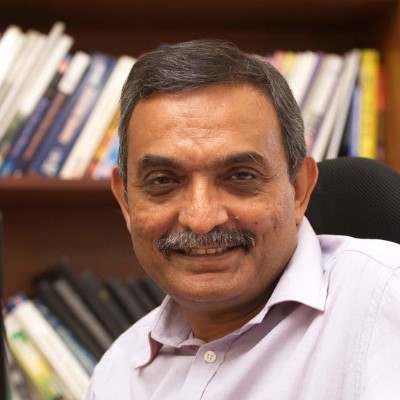
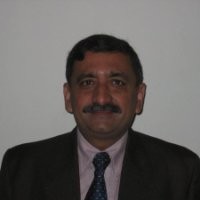
Prof. Janat Shah

Chief Strategy Advisor

Prof. Janat Shah

Founding Director, IIM Udaipur, 2011 to 2022

Within a decade of its founding, the institute earned AACSB accreditation, held by about 5 percent of the world's business schools, and a place in the Financial Times global Masters in Management ranking.

  • Professor of Operations Management for three decades, at IIM Bangalore and IIM Udaipur. At IIM Bangalore he chaired the flagship MBA program and the supply chain management center.
  • A leading authority on supply chain management and operations strategy, and author of Supply Chain Management: Text and Cases (Pearson), used in MBA programs across India.
  • Has consulted for and taught executives of the Aditya Birla Group, Mahindra & Mahindra, Tata Chemicals, Tata Motors, Marico, Infosys and Yokogawa Blue Star.
  • Visiting Scholar, MIT Sloan School of Management.
  • Distinguished Alumnus, IIT Bombay.

B.Tech, IIT Bombay; Fellow (doctorate) in Operations Management, IIM Ahmedabad.


Chief Scientific Advisor

Prof. Pratim Biswas: industrial record, papers and patents.

Droplets, particles and flames: the science under our dryer, boiler and furnace work is his field. A selection of his work:

Industrial record

  • Paint to Power, with Chrysler and Ameren: paint solids from Chrysler's St. Louis plants replaced about 570 tons of coal a year at Ameren's 855 MW Meramec power plant. He led the project to capture mercury with the titanium dioxide in those solids. 2007 Chrysler Environmental Leadership Award. Washington University, 2008
  • A pulse-energized electrostatic precipitator, tested on an iron and steel smelter's exhaust, captured over 98.9% of particles from 0.16 to 6.7 µm by number. Aerosol and Air Quality Research, 2012
  • Aerosol and gas emissions measured at a working coal-fired power plant under five operating conditions. Journal of the Air & Waste Management Association, 2019

Selected papers

  • Porous particles made by spray drying. Advanced Materials, 2007
  • Predicting the size and charge of particles formed as droplets evaporate. Chemical Engineering Science, 2021
  • A model of particle-laden gas flows with strong heat and mass transfer between the gas and the particles. Computers & Fluids, 2006
  • Four kinds of particle-population model compared for aerosol dynamics. Aerosol Science and Technology, 2020
  • Fine-particle formation and mercury under O2-CO2 coal combustion. Energy & Fuels, 2006
  • Control of toxic metal emissions from combustors using sorbents: a review. Journal of the Air & Waste Management Association, 1998
  • Aerosol formation during biomass pyrolysis, studied in a flat flame reactor. Fuel, 2014

His full publication list

Patents

  • Enhanced capture of heavy-metal emissions from combustion exhaust. US 6,248,217, 2001
  • Charging and capture of particles in coronas irradiated by in-situ X-rays. US 6,861,036, 2005
  • Photocatalytic oxidation of organic compounds in air or water, with the US EPA. US 7,691,342, 2010
  • Nanostructured films made in a flame aerosol reactor. US 10,889,904, 2021
  • An aerosol sensor combining particle counting with multiwavelength or multiangle measurement. US 11,614,392, 2023

Five of his 17 US patents.


The group

Who does the work.

The engines behind TC-APC were built within the group, and the group customizes and tunes them to each process it takes on. Among the associates are a Fellow of the Indian National Academy of Engineering who designed control systems for ISRO's launch vehicles, an inventor with 92 US patents, and a Senior Vice President of Innovation at Reliance Industries for 13 years.

Associate Consultants, India

  • Dr. Makarand Phadke

    Dr. Makarand Phadke

    Process research at Rohm and Haas, Philadelphia; Executive Vice President and Business Head, Chemical Division, Thermax; CEO, Aquapharm Chemicals; Senior Vice President, Innovation, Reliance Industries. Chairs FICCI's Science, Technology and Innovation Committee.

    Ph.D. in Chemical Engineering, Carnegie Mellon; B.Tech in Chemical Engineering, IIT Bombay.

  • Madhav Dhekane

    Madhav Dhekane

    Fellow, Indian National Academy of Engineering. 34 years at ISRO, retiring as Distinguished Scientist and Director, ISRO Inertial Systems Unit. Control systems designer and mission analyst for ISRO's launch vehicles, from the ASLV and PSLV to the GSLV Mk III; on the Chandrayaan-2 post-mission analysis and Chandrayaan-3 simulation review committees.

    B.Tech in Electrical Engineering and M.Tech in Systems and Control Engineering, IIT Bombay.

  • Dr. Pramod Khambete

    Dr. Pramod Khambete

    Adjunct Professor, IDC School of Design, IIT Bombay. User experience and service design for complex systems; earlier head of the User Interaction Design Group at Tech Mahindra, and on the core team that conceived TataNet, the Tata Group's VSAT network.

    B.Tech in Mechanical Engineering, M.Des in Industrial Design and Ph.D., IIT Bombay.

  • Sunil Kamat

    Sunil KamatFirst point of contact

    Real-time optimization of chemical and industrial processes for higher yield and throughput at lower energy, combining process knowledge with artificial intelligence. Wrote the Chemical Weekly special report of October 2025 on this approach. Author of the novel The Osprey, which reached #3 in Science Fiction on Amazon India.

    B.Tech in Electrical and Electronics Engineering, IIT Bombay.

  • Anil Apte

    Anil Apte

    Program and project governance: takes complex technology projects from plan to working system, 35 years across engineering and software. Senior Vice President, Extentia.

    B.Tech in Electrical and Electronics Engineering, IIT Bombay; Advanced Project Management Certificate, Stanford.

  • Anil Bongale

    Anil Bongale

    Business operations for large technology programs in India, the UK and Europe: Director, Business Operations, Tech Mahindra; earlier with TCS, IBM Daksh and Ramco Systems in London.

    B.Tech in Mechanical Engineering, IIT Bombay; PGDBM, IIM Calcutta.

  • Girish Karhadkar

    Girish Karhadkar

    27 years heading the electrical and electronic technology group at Godrej & Boyce: R&D, control and automation. Since then, commercializing IIT Bombay research and mentoring startups at SINE, IIT Bombay's incubator; IoT and AI.

    B.Tech in Electrical Engineering, IIT Bombay.

  • Mayank Patel

    Mayank Patel

    Has run his own chemical manufacturing company since 1984: President, Industrial Products Mfg. Co., Pune, in polyurethanes and titanates; earlier a process engineer with Davy Powergas.

    M.S. in Chemical Engineering, Notre Dame; B.Tech in Chemical Engineering, IIT Bombay.

  • Nandu Madhekar

    Nandu Madhekar

    Over 40 years in chemical process engineering: ethanol plant design at Praj Industries, project engineering with Jacobs H&G, and since 1992 Designated Partner, Innovative Chemical Technologies LLP. Distillation, process simulation and optimization.

    M.S. in Chemical Engineering, Virginia Tech; B.Tech in Chemical Engineering, IIT Bombay.

Associate Consultants, United States

  • Sunil Mehta

    Sunil Mehta92 US patentsSilicon Valley

    Four decades developing semiconductor process technology at Intel, AMD, Lattice, Atmel and Analog Devices, as named inventor on all 92 patents and author of 18 technical publications. Now Chief of Staff, PIMIC.ai, in edge AI. Author of the novel The Compass.

    B.Tech in Chemical Engineering, IIT Bombay; M.S. in Chemical Engineering, Penn State; two graduate degrees in Chemical and Electrical Engineering, MIT.

  • Nitin Borwankar

    Nitin BorwankarSan Francisco Bay Area

    Advanced technology consultant since 1993, now in AI and large language models; author of Vector Databases (O'Reilly); fractional CTO.

    B.Tech in Electrical Engineering, IIT Bombay; M.S. in Applied Mathematics, USC.

  • Bhushan Dandawate

    Bhushan DandawateWashington, DC area

    CXO advisor who builds enterprise value through new products, markets and revenue streams; 17 years as President and CEO of AVC, a strategy and interim CXO practice; board and advisory roles with technology firms.

    B.Tech, IIT Bombay; M.S., Clemson; MBA, Michigan Ross.

Alongside them, a wider circle of IIT Bombay engineers in India and the United States is part of the group, including several who built TC-APC's models and engines.

What the group works on is model-based supervisory control for thermally constrained and composition-limited processes. In plainer terms: plants where the number that decides the money is not the number on the panel, and where somebody is therefore holding a margin without being able to say how wide it is.

We focus on one kind of problem, and the focus is deliberate. If yours is a tuning, valve or instrumentation problem, we will say so and point you to the right people.

Published in Chemical Weekly, October 2025, on combining process knowledge with artificial intelligence to optimize chemical manufacturing, covering nitration, condensation, carbonation, sugar crystallization and Grignard reactions.


The part that matters

Our commitments.

Each one is visible on this site.

01

Every number we publish, we can defend

Our deployment produced a signed letter citing better control of parameters and an increase in conversion efficiency. We quote it exactly as written.

02

Our deployment is named

Fourteen carbonation towers at Saurashtra Chemicals, a division of Nirma Ltd, Porbandar. The certificate is published, and the General Manager who coordinated the work takes reference calls directly.

03

We will tell you there is nothing to buy

If the data audit shows your unit is already being run close to its limit, that is the answer and we say it. The same applies where the real problem is a data gap, an upstream work-up or a mechanical limitation rather than a control policy.

04

Your data, your process and our conversations stay confidential

A client is named only with its consent. Everyone else stays unnamed, including the ones whose problems taught us the most.

05

Quality and safety limits are hard constraints

They are never weighed against yield. TC-APC sits above your DCS, PLC or SLC and leaves your safety systems exactly as they are.


How the work actually goes.

It starts with your data, not our proposal

One unit, its operating data and the laboratory results beside it, at no charge and with nothing connected to anything. The numbers decide whether to go further.

Your engineers see the model

This is an engineering partnership: your process team sees inside it, so it's a system they understand and trust.

It writes setpoints only when you say so

Tuned offsite, then run in shadow mode on your live plant until the estimate tracks your own laboratory inside a tolerance you set. The sequence in full.

The mark

Find the optimum. Hold it while it moves.

The curve is a yield or selectivity response. The amber point is the optimum, and the dashed drop is where it sits on the operating axis.

The second half of the line is the part that matters. Finding an optimum is a study, and studies end up in drawers. Holding one while the feed, the fouling, the weather and the wear keep moving it is a control problem, and that is the work.

Contact

Write, and you will get an engineer rather than a form.

Email

projects@yielddynamics.in

Best for sending data or a description of the unit

Reference call

Ask and we will put you in touch with the General Manager who coordinated the Saurashtra work.

Our track record

The technical note is free, with no form. Or write, and an engineer will reply.

Start with the note

Cut-point determination in the vacuum fractionation of odour-critical products

Three pages on the measurement problem and what can be inferred without new analyzers, including a section on what the approach cannot do. Free, and nothing to sit through.

Download the note, PDF

Or start with your own unit

Send operating data with the laboratory results beside it

You'll know how wide your margin is, what it costs, and whether it's worth pursuing, with the uncertainty stated openly. No charge and no commitment.

projects@yielddynamics.in Talk to IIT Bombay engineers Call +91 94230 07004Monday to Saturday, 9:00 to 19:00 IST

WhatsApp