Thermo-Cognitive Advanced Process Control (TC-APC) models, simulates and optimizes your process in real time to improve yield, conversion and throughput, and reduce energy use, with a quick payback.
Utilities, water and power
Every plant pays for steam, air, cooling and water. Few know what each tonne of product costs in them.
Boilers, compressors, chillers and pumps run at settings chosen to be safe.
Safe usually means more pressure, colder water and more air than the process needs.
Problems we hear
In the words plants use when they search.
- Boiler fuel consumption high
- Reduce boiler fuel consumption
- Boiler efficiency improvement
- Compressed air energy saving
- Air compressor power consumption
- Compressed air leakage
- Etp operating cost reduction
- Etp chemical consumption
- Stp energy consumption
- Captive power plant efficiency
- Turbine heat rate
- Cogeneration efficiency
- Cold storage power consumption
- Cold storage energy saving
Engineering proposal. Begins with a free check.
The science under TC-APC
A boiler's result is decided in the flame and the fuel.
In a captive power or steam plant, the air the fuel needs, how completely it burns and what leaves the stack are all set in the flame. That's the science TC-APC is built on, and AI makes it sharper.
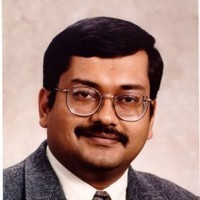
This is the field of our Chief Scientific Advisor, Prof. Pratim Biswas, Member, US National Academy of Engineering and former Dean of Engineering, University of Miami. His work includes:
- Paint to Power, with Chrysler and Ameren: paint solids from Chrysler's St. Louis plants replaced about 570 tons of coal a year at Ameren's 855 MW Meramec power plant. He led the project to capture mercury with the titanium dioxide in those solids. 2007 Chrysler Environmental Leadership Award. Washington University, 2008
- Aerosol and gas emissions measured at a working coal-fired power plant under five operating conditions. Journal of the Air & Waste Management Association, 2019
- Fine and ultrafine particles captured from a pilot-scale pulverized-coal combustor with an electrostatic precipitator. Journal of the Air & Waste Management Association, 2009
- Patent: enhanced capture of heavy-metal emissions from combustion exhaust. US 6,248,217, 2001
What nobody measures.
Quality of the boiler fuel
The coal changes with every lot and the air does not follow it.
Air the lines are losing
Leaks run day and night, and compressors are set high to cover them.
Energy per unit of product
The bill arrives monthly, and nobody can say which unit or which shift spent it.
Each of these is worked out live from the physics of the readings your plant already has. TC-APC then holds the process at the optimum as it moves, writing setpoints back to your DCS, PLC or SLC within limits you set.
The nearest proof pages are boilers and combustion and Plant Ledger, with its power bill guard and utilities first.
What we commit to
The same eight commitments, on every project.
No gain, no project
If the check finds nothing worth doing, we say so and stop there.
Savings on your own meters
Before and after, on your instruments, so the result is yours to check.
Shadow mode first
It writes setpoints only after you have watched it be right.
Interlocks untouched
Trips, interlocks and the safety system stay under their own logic.
Runs inside your plant
On its own industrial system and your network, working when the internet is not.
Uses existing instruments
It reads what your DCS, PLC or SLC already measures, and says so where one instrument would close a gap.
Physics first, then AI
A model of the process's own physics, with learning only for what physics cannot know.
Published in Chemical Weekly
The approach, set out as a Special Report in October 2025.
The mark
Find the optimum. Hold it while it moves.
The curve is a yield or selectivity response. The amber point is the optimum, and the dashed drop is where it sits on the operating axis.
The second half of the line is the part that matters. Finding an optimum is a study, and studies end up in drawers. Holding one while the feed, the fouling, the weather and the wear keep moving it is a control problem, and that is the work.
Start with your log sheets
Send one month of log sheets from one area
Photographs are fine. We will show you what the area is losing, which meters disagree with the physics, and what that is worth, including the answer that there is nothing worth pursuing. No charge, and no commitment either way.
Or start with three months of data
If you already keep a historian
Send three months of operating data from one unit, with the laboratory results beside it. The same exercise, done faster, with the same honest answer at the end. How both work.
projects@yielddynamics.in Talk to IIT Bombay engineers Call +91 94230 07004Monday to Saturday, 9:00 to 19:00 IST