Thermo-Cognitive Advanced Process Control (TC-APC) models, simulates and optimizes your process in real time to improve yield, conversion and throughput, and reduce energy use, with a quick payback.
Kilns, furnaces and metals
The fuel bill is set by a temperature nobody can see, inside the tile, the billet or the charge.
Kilns and furnaces are fired to a thermocouple in the gas.
What decides quality and fuel is the temperature inside the product.
Problems we hear
In the words plants use when they search.
- Tile kiln gas consumption
- Ceramic kiln fuel consumption
- Vitrified tile kiln fuel
- Reheating furnace fuel consumption
- Reheating furnace efficiency
- Induction furnace power consumption
- Kiln coal consumption high
- Free lime variation clinker
- Kiln coating problem
- Glass furnace fuel consumption
- Glass furnace temperature control
- Glass defects seeds
- Aluminum melting furnace fuel
- Aluminum dross loss
Engineering proposal. Begins with a free check.
The science under TC-APC
A kiln's result is decided in the flame and the charge.
How much fuel it burns, and the heat that actually reaches the tile, the billet or the charge, are set in the flame and inside the load, where no sensor can see. That's the science TC-APC is built on, and AI makes it sharper.
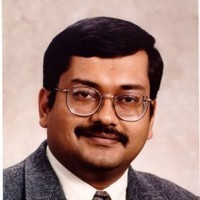
This is the field of our Chief Scientific Advisor, Prof. Pratim Biswas, Member, US National Academy of Engineering and former Dean of Engineering, University of Miami. His published work includes:
- A pulse-energized electrostatic precipitator, tested on an iron and steel smelter's exhaust, captured over 98.9% of particles from 0.16 to 6.7 µm by number. Aerosol and Air Quality Research, 2012
- Removing carbon contamination from silicon kerf, an industrial waste, in a furnace aerosol reactor. Industrial & Engineering Chemistry Research, 2015
- Organic aerosol formed as pulverized coal burns in a drop tube furnace. Atmospheric Chemistry and Physics, 2013
What nobody measures.
Core temperature of the load
Soak and firing times are set long to be safe, because the core is never measured.
Quality of the fuel
Coal, gas and pet coke vary by lot, and the burners are set for the lot you assumed.
Heat leaving with the flue gas
Excess air is tuned once and held, while the fuel and the load keep changing.
Each of these is worked out live from the physics of the readings your plant already has. TC-APC then holds the process at the optimum as it moves, writing setpoints back to your DCS, PLC or SLC within limits you set.
The nearest proof pages are boilers and combustion, for fuel that changes by the lot, and the machines section of Plant Ledger, for soaking to the core rather than the clock.
What we commit to
The same eight commitments, on every project.
No gain, no project
If the check finds nothing worth doing, we say so and stop there.
Savings on your own meters
Before and after, on your instruments, so the result is yours to check.
Shadow mode first
It writes setpoints only after you have watched it be right.
Interlocks untouched
Trips, interlocks and the safety system stay under their own logic.
Runs inside your plant
On its own industrial system and your network, working when the internet is not.
Uses existing instruments
It reads what your DCS, PLC or SLC already measures, and says so where one instrument would close a gap.
Physics first, then AI
A model of the process's own physics, with learning only for what physics cannot know.
Published in Chemical Weekly
The approach, set out as a Special Report in October 2025.
The mark
Find the optimum. Hold it while it moves.
The curve is a yield or selectivity response. The amber point is the optimum, and the dashed drop is where it sits on the operating axis.
The second half of the line is the part that matters. Finding an optimum is a study, and studies end up in drawers. Holding one while the feed, the fouling, the weather and the wear keep moving it is a control problem, and that is the work.
Start with your log sheets
Send one month of log sheets from one area
Photographs are fine. We will show you what the area is losing, which meters disagree with the physics, and what that is worth, including the answer that there is nothing worth pursuing. No charge, and no commitment either way.
Or start with three months of data
If you already keep a historian
Send three months of operating data from one unit, with the laboratory results beside it. The same exercise, done faster, with the same honest answer at the end. How both work.
projects@yielddynamics.in Talk to IIT Bombay engineers Call +91 94230 07004Monday to Saturday, 9:00 to 19:00 IST